
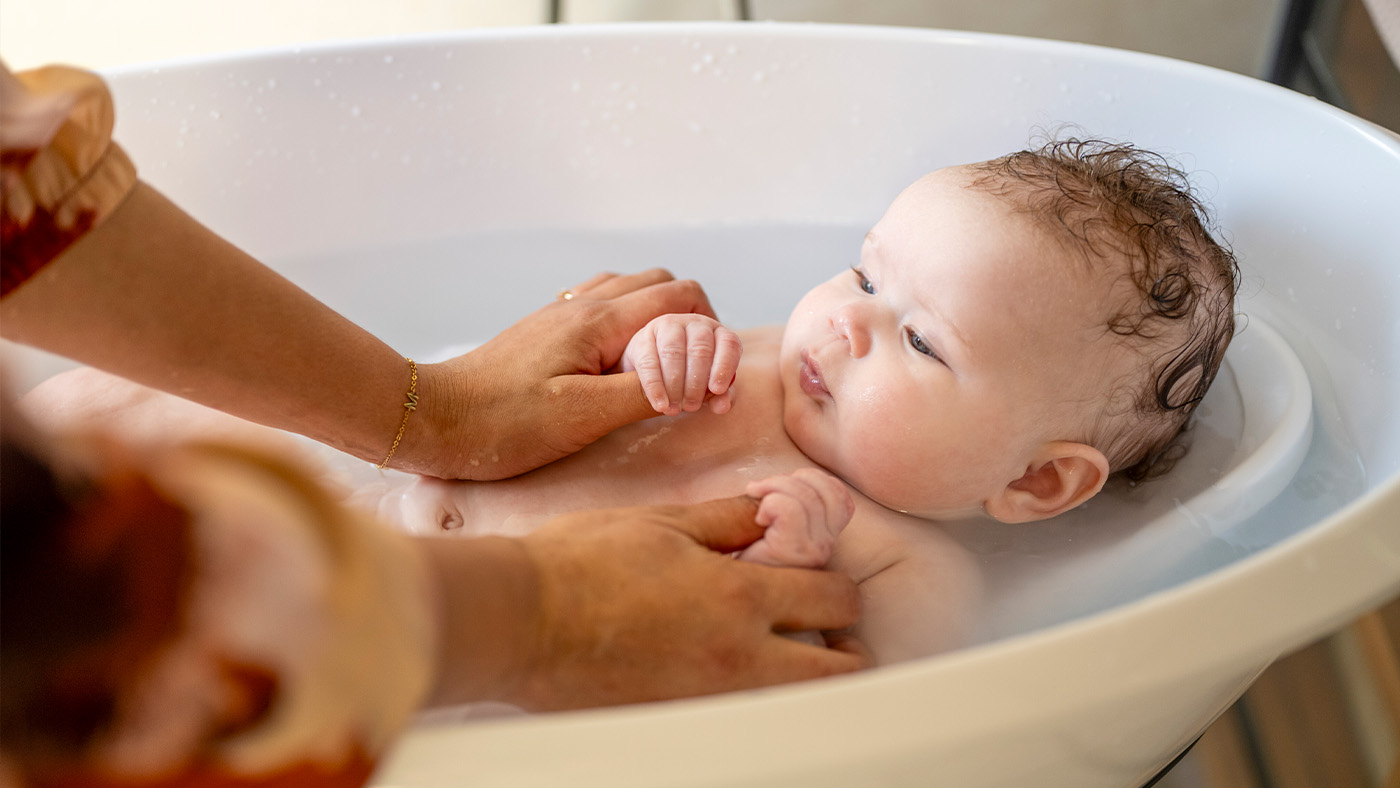
Bath time is one of those newborn milestones that sounds simple until you’re standing over a slippery, wriggling baby wondering if you’re doing it right. If you’re feeling unsure about newborn bathing basics, like when to start, how often to bathe your baby, and how to keep them safe and comfortable, you’re not alone. Every new parent starts here.
This guide walks you through what to expect, from your baby’s first bath to building a bath time routine you’ll both enjoy.
When to Give Your Newborn Their First Bath
Guidance on newborn bathing basics has changed quite a bit over the years. Not long ago, babies were typically bathed within their first couple of hours of life. These days, most providers recommend delayed infant bathing, waiting at least six hours, and ideally closer to a full day, before your baby’s first bath. Here’s why a little patience pays off:
- Body temperature: Newborns aren’t yet skilled at regulating their own body temperature, and a sudden bath can be more than their system is ready to handle.
- Blood sugar: The stress of an early bath can sometimes trigger a dip in blood sugar.
- Bonding: Time spent bathing is time your baby isn’t spending skin-to-skin with you, which can affect early bonding and breastfeeding.
- Skin protection: Vernix, the waxy white coating on your newborn’s skin, offers real protection right after birth. The American Academy of Pediatrics recommends leaving it in place a while longer, especially for babies born early.
Share how you talk new parents through the first-bath timeline in the hospital or at the first newborn visit, or a moment when waiting a little longer made a noticeable difference.
Bathing My Baby With Their Umbilical Cord
The umbilical cord kept your baby fed and oxygenated in the womb. After birth, the stump that remains needs a few weeks of gentle care before it falls off on its own.
Caring for the Umbilical Stump
Until the stump falls off, stick with sponge baths instead of submerging your baby in water. Lay your baby on a flat, safe surface, such as a changing table or a towel on the floor. Using a clean, damp washcloth, wash your baby starting with the face and head and working down toward the diaper area. Keep the stump itself clean and dry, and skip lotions, powders, or alcohol on it unless your provider tells you otherwise. Gently pat it dry when you’re finished.
Keep an eye out for redness, swelling, a foul smell, or discharge around the stump, or a fever in your baby. Those can be signs of infection, and it’s worth calling your provider right away if you notice them.
When It’s Safe to Switch to Full Baths
Once the umbilical stump falls off on its own, usually within a few weeks, you can start giving your baby regular tub baths. Keep the first few short and simple so your baby can adjust to this new experience.
How Often to Bathe Your Newborn
Babies don’t sweat or get dirty the way older kids and adults do, so newborn bathing basics call for a lot less frequent washing than you might expect. Every two to three days is usually plenty. Bathing more often than that can dry out your baby’s sensitive skin and cause more irritation than it prevents.
How often should you wash newborn hair?
The same two-to-three-day guidance applies to your newborn’s hair. If your baby develops cradle cap, those scaly patches on the scalp, you can gently loosen them during bath time or simply leave them be. Cradle cap typically clears up on its own.
Add a note about how often you tell parents to wash a newborn’s hair in practice, or a reassuring word for parents worried about cradle cap.
Some days call for an extra wash between scheduled baths, like after a big blowout or a particularly messy feeding. Many parents also stick to quick spot cleaning of the face, hands, and diaper area, sometimes called “topping and tailing,” on the days in between full baths. You know your baby best, so trust your judgment here.
How to Bathe a Newborn Safely
Bath time doesn’t have to be stressful, but newborns are fragile, so a few safety habits go a long way:
- Never leave your baby alone in the bath, even for a few seconds. Gather all your supplies ahead of time so you don’t need to step away.
- Only adults should supervise a baby during bath time.
- Keep the room warm to help your baby maintain a steady body temperature.
- Run cold water first, then add warm water until you reach a comfortable temperature.
- Empty the bath as soon as you’re finished.
What You’ll Need
- A washcloth or soft sponge
- A basin, sink, or baby tub
- A rinsing cup, if you like
- A dry towel or blanket
- A mild, fragrance-free baby wash and shampoo, once your baby is old enough to need one
- A gentle moisturizer, if your baby’s skin needs it
A Simple Step-by-Step Bath
- Add cold water to the tub first, then warm water until it feels comfortably warm, not hot.
- Undress your baby and gently lower them into the water, supporting their head and neck.
- Wash your baby’s body and diaper area first, then their face, and finish with their hair. Saving hair for last helps keep your baby warmer for most of the bath, since wet hair cools quickly.
- Lift your baby out and wrap them snugly in a dry towel right away.
Getting the Baby Bathwater Temperature Right
Baby bathwater should be warm, never hot. Aim for around 100 degrees Fahrenheit (38 degrees Celsius), and set your water heater no higher than 120 degrees Fahrenheit as an added safety measure. Swirl the water to even out any hot or cold spots before your baby gets in.
If you don’t have a thermometer handy, dip your wrist or elbow into the water instead of your hand. Your palm is less sensitive to temperature, so water that feels fine there could still be too hot for your baby.
A few common mistakes to avoid: don’t add more water once your baby is already in the bath, since the temperature can shift quickly, and don’t leave the water running, which can change the temperature or let the water get dangerously deep.
Mention a quick tip you give parents for testing water temperature, or a common mix-up you see with the wrist-versus-palm test.
What’s the best baby wash and moisturizer for newborn skin?
Newborn skin is thinner and more sensitive than yours, and it can take up to two years to fully develop its protective barrier. Plain water is enough for the first several weeks. Once you introduce soap or shampoo, look for something fragrance-free and free of dyes and sulfates.
Moisturizer isn’t always necessary, but a gentle, fragrance-free lotion can help if your baby’s skin seems dry. If your baby has eczema or another skin condition, ask your provider for a specific recommendation.
Common Newborn Bathing Mistakes
A few small adjustments can make bath time safer and more comfortable:
- Bathing too often, which can dry out your baby’s skin
- Using water that’s too hot, which can cause discomfort or burns
- Stepping away, even briefly, while your baby is in the bath
Building a Calm Bath Time Routine
Like most things with babies, a little consistency goes a long way. Bathing your baby around the same time each day or every few days helps them know what to expect. Involve your baby while you gather supplies so they start to recognize the pattern, and don’t be afraid to add a little fun with a soft toy or a gentle song once they’re old enough to enjoy it. Before long, bath time might become one of your favorite parts of the day together.
Questions about bath time? We’re Here to Help
Every baby settles into their own bathing rhythm, and it’s normal to have questions along the way. If something about your newborn’s skin, umbilical cord, or bath time routine doesn’t seem right, reach out to your Wee Care Pediatrics provider. We offer same-day sick visits at all of our locations, and weekdays until 10pm and weekends until 9pm, so you can get answers when you need them.