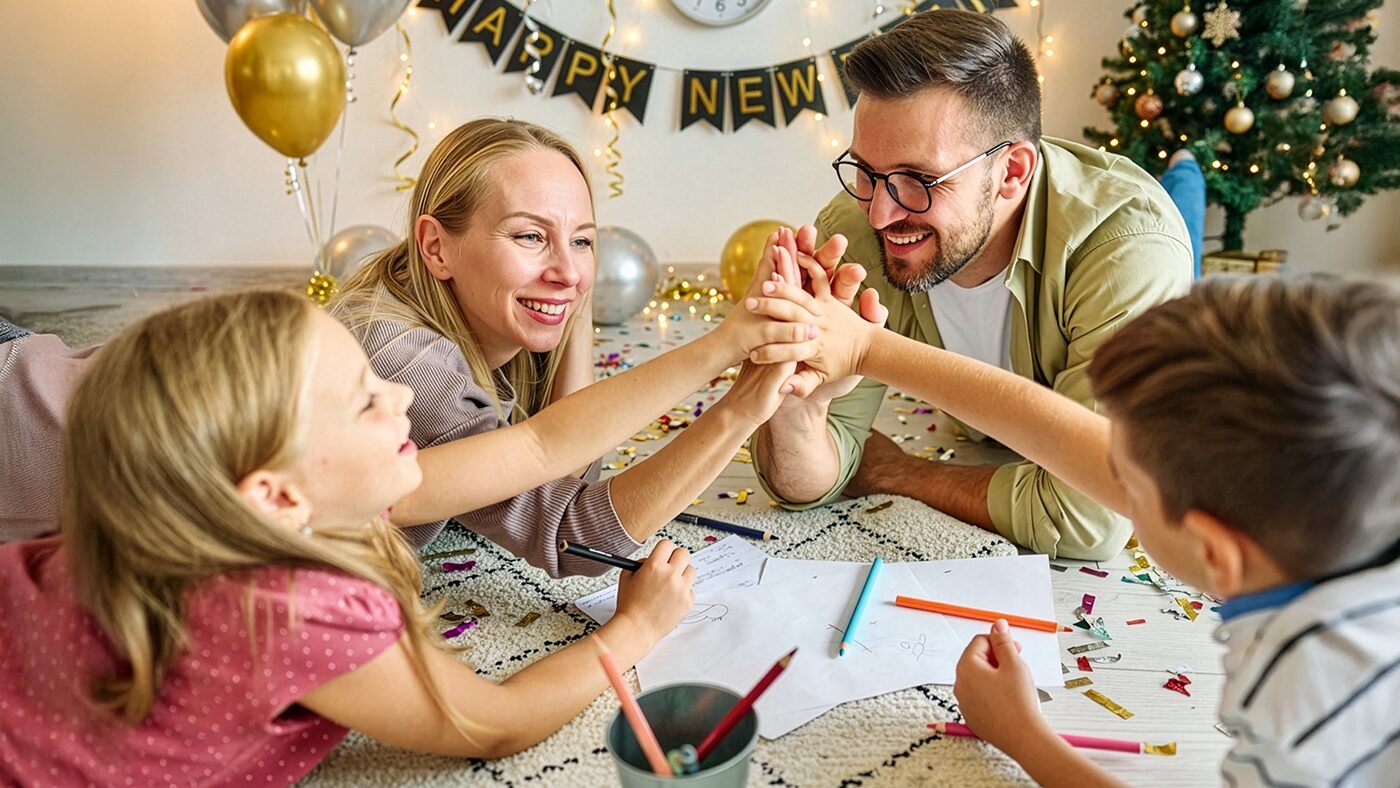
The start of a new year is a natural time to pause, reflect, and think about what matters most to our families. New Year’s resolutions don’t have to be big or serious; they can be a fun way to dream together, try something new, and support one another along the way. Setting simple goals as a family helps children consider their future, feel encouraged and capable, and build healthy habits. It’s less about perfection and more about progress, connection, and cheering each other on one small step at a time.
Why New Year’s Resolutions for Kids Matter
Goal setting has many benefits for kids. It can help improve your child’s academic performance and provide them with a skill they can use to achieve their goals throughout the year and throughout their lives.
Setting goals can give kids a roadmap to success. A good motto to keep in mind is “Big goals are made of small, repeatable actions.” By breaking goals down into smaller steps, your child will have a clear path from step one to step whatever. By identifying milestones, your child will know exactly what success looks like and gain a boost in self-confidence.
By setting attainable goals and achieving them, kids learn that with the right planning, preparation, and follow-through, they can accomplish anything they set their minds to. That confidence will help them when tackling larger goals in school, sports, higher education, careers, and more throughout their lives.
Setting and achieving goals teaches kids to think about what they want, consider how to get there, and take responsibility for their own achievements. They can take ownership of setting and defining their goals, breaking them into smaller tasks, and tracking their progress. Of course, parents and caregivers can help along the way by guiding and encouraging them.
Introducing Goal Setting in a Kid-Friendly Way
A resolution is just another word for a goal or commitment. A resolution is a promise to yourself to create a habit, focus on a specific goal, or learn a skill.
1) Make setting resolutions a family activity.
Sit down with your child while they set goals and set some goals of your own. Setting goals together means you can help keep each other on track, and you might even be able to set a resolution you can do together.
2) Think of creative ways to meet goals that work with your child’s lifestyle.
If your child’s goal is to eat more vegetables, consider putting them into a smoothie or blending them into favorite foods. A little creativity can make meeting your goals easier and increase your child’s likelihood of success.
3) Use SMART goals for kids to make success achievable.
Set goals which are Specific, Measurable, Achievable, Realistic, and Timely. This helps to make sure your child won’t become discouraged by an unachievable goal.
4) Give your child some autonomy and independence in setting their resolutions.
Encourage your child to identify behaviors they would like to make habits or skills they would like to develop in the new year. They’re more likely to succeed if they are personally invested and excited about their goal.
Good New Year Resolutions for Different Age Groups
Goals can and should evolve as your child gets older and gains new skills. It’s important to set resolutions that are age and developmentally appropriate for your child.
Simple Habits for Younger Children
Goals for Kids Ages 1-3:
- Follow a simple daily routine (meals, nap, play, bedtime)
- Explore movement (walking, jumping, climbing safely)
- Use gestures, sounds, or words to communicate needs
- Try new foods or textures without pressure
- Practice gentle hands and sharing with others
- Help with cleaning up toys or after meals
- Spend daily time reading or looking at books together
Goals for Kids Ages 3-5:
- Brush teeth twice a day
- Use words to express feelings instead of actions
- Practice turn-taking and sharing
- Complete simple chores (put toys away, help set the table)
- Wash hands independently before meals and after using the bathroom
- Practice letters, numbers, or shapes through play
- Try one new activity or food each week
- Use polite words like “please” and “thank you”
New Year Resolution Ideas for Older Kids and Teens
Goals for Kids Ages 6-12:
- Complete homework during a set daily time
- Drink more water and minimize soda and juice intake
- Get at least an hour of physical activity each day (start with even just 15 minutes and increase it to 30 and then 60 over time if it’s something they struggle with)
- Limit screen time to two hours per day (balance with physical activity)
- Read for 20-30 minutes every day
- Wear helmets and other safety equipment when doing things like riding a bike, scooter, or skateboard
- Be kind and friendly to other kids (say hello to a classmate every morning, invite someone to sit with you at lunch, schedule a playdate)
- Help with household chores on a regular basis
- Ask for adult help when they’re scared, need support, or are unsure what to do
Goals for Kids Ages 13-18:
- Drink more water and minimize soda, juice, and energy drink intake
- Eat more vegetables every day
- Get at least an hour of physical activity each day (start with even just 15 minutes and increase it to 30 and then 60 over time if it’s something they struggle with)
- Limit screen time and social media consumption to two hours per day
- Get 8-10 hours of sleep per night
- Volunteer or engage with the community on a weekly or monthly basis
- Join or maintain involvement in sports and set specific goals for improving in that sport
- Practice good sportsmanship and teamwork
- Manage emotions in healthy ways (talking, journaling, meditating, breathwork, etc.)
- Communicate with and hang out with friends in real life on a regular basis
- Drive safely by not texting or using the phone while driving
How to Teach Kids Responsibility Through Goal Setting
Help your children learn independence and responsibility with age-appropriate tasks. Early goals can include picking up toys and brushing their teeth (with help, if needed). As kids get older, goals might include using the potty, eating their vegetables, or helping set the table. Older kids might focus on their peer relationships or academic responsibilities.
Once your child has set some goals, encourage them to follow through, without pressure. Use age-appropriate rewards and praise to encourage your child. You can use a fun tracking system and celebrate milestones as your child achieves them.
If your child falls off track, encourage them to have a freshstart and try again. Regardless of the time of year, everyone can use a fresh start sometimes. When your child succeeds, heap them with love and praise. For many kids, verbal affirmation can be a reward in itself.
Building Confidence in Kids as They Reach Their Goals
We can’t always control the outcome of our goals, but we can celebrate progress and effort.
Celebrating Progress and Effort
Use a calendar or a sticker chart to track progress, or keep a jar and add a bead each time they work toward their goal. When your child meets their goals, such as brushing their teeth twice a day for an entire week, provide praise or celebrate their achievement.
All for slip-ups. It’s common for people (kids and adults) to set a goal, stick to it for a few weeks, and then fall off. Sometimes, people feel like once they make a mistake, they might as well give up. Instead, talk with your child about any barriers in their way and brainstorm solutions. Have your child check in with themselves regularly and recommit to their goals, even if they’ve strayed a little.
Helping Kids Recognize Their Own Growth
Setting ambitious goals can be scary sometimes, and it can be hard to see progress day to day.
Break big goals down into smaller, more bite-sized tasks that can be checked off on a more regular basis. These small mini-goals provide a boost of confidence when your child achieves them and help to keep them motivated on their larger goal.
Focus on things your child can control. For example:
- Instead of: “Turn in all my homework on time.”
Try: “Check my planner and backpack every afternoon before screen time.” - Instead of: “Keep my room clean.”
Try: “Pick up toys and clothes for 5 minutes before bedtime.” - Instead of: “Be nicer to my siblings.”
Try: “Use kind words or help my sibling once a day.” - Instead of: “Be healthier.”
Try: “Drink one full water bottle at school each day and one after I come home.” - Instead of: “Have better mornings.”
Try: “Get dressed and brush my teeth before screen time every day.” - Instead of: “Make the team.”
Try: “Practice shooting for 30 minutes every afternoon.” - Instead of: “Spend less time gaming.”
Try: “Play outside or move my body for 60 minutes before gaming.”
Make sure to measure success every once in a while so your child can see their progress. And focus on how far they’ve come, not how far they have left to go. Reviewing the progress they have made can boost your child’s confidence and drive to continue working towards those bigger goals. Soon, your child will be able to see that something that once felt overwhelming has become easier for them and may even be a part of their daily routine. And that’s a win all around!
SOURCES:
https://www.kidsfirstpediatricpartners.com/parent-education/healthy-new-years-resolutions-kids/
https://www.hopkinsmedicine.org/health/wellness-and-prevention/new-years-resolutions-for-kids
https://www.scholarsed.com/the-benefits-of-goal-setting-for-kids/
https://oxfordlearning.com/7-ways-goal-setting-helps-your-child-succeed-at-school/
https://charityforchange.org/responsible-kids-bright-futures-the-power-of-goal-setting/